Solving problems every tea drinker faces.
Exclusive subscriber benefits:
Receive four FREE quality ebooks worth $60
-
Save at least $5 during your first purchase
White tea is characterized by heavy withering and slight oxidation.
When making green tea, high heat is applied to kill the enzymes and stop the oxidation process.
Not so for white tea.
In contrast, when making white tea, fresh tea leaves are left to wither for up to 3 days.
Tea enzymes cause the leaves to mature, but factory conditions have to be precisely controlled to minimize oxidation.
The tea is then sun or oven dried to reduce moisture to 5% or lower.
It is a tricky business that takes a lot of skill and experience to get right.
Oldest Tea
White tea may be the oldest type of tea.
The ancient Chinese would sun-dry tea before storing for later consumption. It may not sound very sophisticated, but this is basically white tea processing.
Song Dynasty
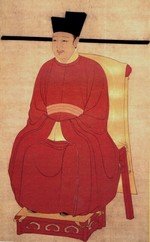 The word "white tea"
(baicha) first emerged in Emperor Song
Hui Zong's Daguan Chalun in 12th
century:
The word "white tea"
(baicha) first emerged in Emperor Song
Hui Zong's Daguan Chalun in 12th
century:
Some experts mistook this for white tea.
Emperor Song Hui Zong was referring to tea plants with white leaves, such as Wuyi Rock Tea's Baijiguan (White Rooster) and the popular Anji Baicha.
Even though they have white colored leaves, they are processed like green tea, and so are considered green tea, not white tea.
Ming Dynasty
The first written records of white tea appeared in Tian's Zhuquan Xiaopin in 1554:
So white tea processing did exist back in 16th century. However, modern white tea didn't take off until late 19th century.
Silver Needle
 The highest quality
white tea is made entirely of buds.
The highest quality
white tea is made entirely of buds.
It is known as Silver Needle or Baihao Yinzhen.
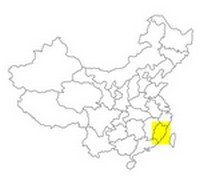
It was first produced in southern China's Fujian Province, in the county of Fuding and Zhenghe.
Fuding County
According to authoritative sources of Chinese white tea history, Silver Needle was first invented in late 18th century Fujian Province.
The breakthrough was achieved in 1857 at Fuding County.

The Fuding Big White (Dabai) tea plant, native to Fuding's Taimu Mountain, was successfully cultivated using asexual propagation technique.
Its enormous buds and showy white hairs make it ideal for making Silver Needle.
Production started in 1885. It was an instant hit - the Big White sold for 10 times more than its predecessor.
Zhenghe County
Zhenghe County quickly followed suit. The Zhenghe Big White tea plant was cultivated in 1880. Production began in 1889.
Export Darling
Although Silver Needle is one of China's 10 Famous Teas, few Chinese drink it. Since its 20th century rebirth, it is destined primarily for export.
First exported in 1891, Silver Needle was hugely popular overseas, until the First World War struck and reduced trade to a trickle.
History has gone a full cycle - it is regaining its allure with foreign drinkers in recent years.
New! Comments: Like This Story? Leave A Comment!
References
Yuan Di Shun (2006). Zhongguo Baicha. Xiamen Daxue Chubanshe.
Related Articles
Oolong Tea History - The Origins of Black Dragon
Oolong tea history goes back at least 500 years. There are 3 widely quoted theories on how it started to exist.
What Is Tribute Tea Or Gong Cha?
Tribute tea, or Gong Cha, was consumed by Chinese emperors. It has a huge influence on the course of Chinese tea history.
Back to Top of White Tea History
Back to Chinese White Tea Main Page
Back to Amazing Green Tea Home
Copyright� 2006-2025 Amazing-Green-Tea.com. All rights reserved.