Solving problems every tea drinker faces.
Exclusive subscriber benefits:
Receive four FREE quality ebooks worth $60
-
Save at least $5 during your first purchase
If there is one compound that makes tea such a mesmerizing drink, then this is it.
An unusual amino acid that is found only in the tea plant, it has three amazing properties: it is delicious, makes you feel fantastic and rids the body of many ailments.
In a short while, you will learn why theanine is so special, and which tea contains the highest levels, according to scientists.
Delicious
The taste is described by connoisseurs as unami, or brothy, and more commonly as savory, fresh and lively. It is what gives tea the characteristic sweet taste that counteracts tea’s natural bitterness and astringency.
Those familiar with Chinese and Japanese foods might be aware of the flavor enhancer monosodium glutamate, commonly known as MSG. Well, it has a similar effect on taste buds.
To many experts, theanine quantity is the single most important indicator of quality.
Relaxing
As a derivative of glutamine, theanine's small molecular size allows it to cross the blood-brain barrier. Because it can enter the brain, it has been shown to reduce mental and physical stress, and to produce feelings of relaxation. But unlike other herbs, it does not cause drowsiness.
Scientific studies have shown that it increases the brain’s production of serotonin, dopamine, and GABA (gamma-aminobutyric acid).
GABA is an amino acid and neurotransmitter that helps to induce relaxation and sleep. It is known as a “balancer” that kicks in when the brain is over-excited.
Dopamine is a hormone and neurotransmitter that is released during activities such as eating and sex. It is associated with a feeling of well-being.
Anxiety Buster and Much More
Decaffeinating
Although tea contains caffeine, high quality tea is relaxing rather than stimulating because theanine counteracts caffeine's harmful side effects.
A study conducted by Kimura showed that it reduced convulsions caused by high doses of caffeine. It also reduces hypertension and sleep disturbance.
Caffeine is the Yang (male) and theanine is the Ying (female) of tea. They synergise to make tea such an enchanting drink.
Green Tea Caffeine Content Paradox
How Much Theanine Content?
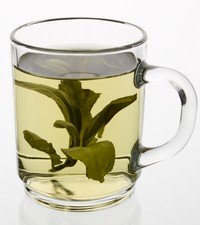
According to Cooper, 3 to 4 cups of green tea contains 60 to 160 milligrams. A recent study by Foxe found that just 4 cups of green tea improves your focus on complicated tasks.
It reaches the maximum levels in the blood between 30 minutes to 2 hours after ingestion.
Studies on test rats have shown that even repeated, extremely high doses cause little to no harmful effects. However, green tea contains caffeine, which can cause restlessness and irritability when consumed in large amounts.
The United Kingdom Tea Council recommends that 6 cups of tea a day or fewer is safe for most healthy adults.
6 cups is equivalent to 300 milligrams of caffeine, which has been found in a large-scale population study conducted by Paganini to be optimum in reducing death risk.
Drink Tea Or Take Supplements?
Scientists and doctors recommend drinking tea rather than taking supplements for a number of reasons.
Tea contains more than 200 bioactive compounds. They often act in synergy (i.e. the whole is greater than the sum of its parts). Taking supplements is unlikely to be as beneficial as drinking tea, as supplements do not contain these other compounds.
Which Tea?
Finally, which tea contains the highest levels of theanine?
A 2004 study conducted by the UK Institute of Food Research analyzed 191 green teas from different countries. According to the authors, the size (age) of the leaves is actually the main criterion for grading green tea, and unlike black tea, green tea quality is directly related to the grading.
In general, high quality green tea is described as "delicate" or "sweet." Sweetness is attributed to amino acids, especially theanine.
Put another way, tea that tastes sweet, fresh and savory will most likely be theanine-rich.
The authors observations are confirmed by numerous Chinese studies, which have found that young tea buds contain the highest concentrations, implying that high quality white and green tea contains more theanine than black tea.
Black tea and green tea both contain significant levels of caffeine, but green tea is usually perceived to be less stimulating, which could be partly explained by the presence of theanine.
The paper singles out Dragon Well tea as the "highest quality Chinese tea" and says it contains "higher levels of theanine".
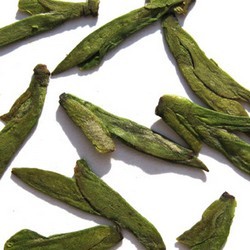 Imagine you are sipping the best green tea in the world.
Despite being a long time drinker of green tea, you are completely blown away. Never have you tasted something so fresh and full bodied, lightly floral and yet flavorful.
No matter what water temperature you use, the tea is always sweet and never bitter.
2-3 glasses mid morning leave you completely relaxed and energized for the day. Your palate feels very clean, silky and refreshed all day long. Your mind feels calm and concentrates very well with whatever task at hand.
This tea is called Tribute Dragon Well Tea. It is grown in the Lion Peak Mountain of Hangzhou, China. The Chinese White House - Zhong Nan Hai - sources 500 kilograms this tea yearly.
You can now buy this tea from this site at 100% purity.
Launched in 2006, she has accumulated nearly 170 raving reviews. Customers are saying that this is the best green tea they have ever had!
New! Comments: Like This Story? Leave A Comment!
References
Rogers PJ, Smith JE, Heatherley SV, Pleydell-Pearce CW (2007). Time for tea: mood, blood pressure and cognitive performance effects of caffeine and theanine administered alone and together. Psychopharmacology (Berl). 2007 Sep 23.
Huber LG (2003). Green tea catechins and Ltheanine in integrative cancer care: A review of the research. Alternative Complement Therapy 9:294-298.
Zhang G, Miura Y, Yagasaki K (2002). Effects of dietary powdered green tea and theanine on tumor growth and endogenous hyperlipidemia in hepatoma-bearing rats. Bioscience Biotechnology Biochemistry 66:711-716.
Yokogoshi H, Kato Y, Sagesaka YM (1995). Reduction effect of theanine on blood pressure and brain 5-hydroxyindoles in spontaneously hypertensive rats. Bioscience Biotechnology Biochemistry 59:615-618.
Yokogoshi H, Terashima T (2000). Effect of theanine R-glutamylethylamide on brain monoamines, striatal dopamine release, and some kinds of behavior in rats. Nutrition 16:776-777.
Cooper R (2005). Medicinal Benefits of Green Tea. The Journal of Alternative and Complementary Medicine. 11:521-528.
Gwénaëlle Le Gall, Ian J. Colquhoun, and Marianne Defernez (2004). Metabolite Profiling Using 1H NMR Spectroscopy for Quality Assessment of Green Tea, Camellia sinensis (L.). J. Agric. Food Chem., 52 (4), 692 -700, 2004.
Back to Top of Theanine
Back to Theanine Main Page
Back to Amazing Green Tea Home
Copyright� 2006-2025 Amazing-Green-Tea.com. All rights reserved.