Solving problems every tea drinker faces.
Exclusive subscriber benefits:
Receive four FREE quality ebooks worth $60
-
Save at least $5 during your first purchase
1. When Was It Discovered?
While the Chinese have been drinking green tea for more than 2,000 years, l-theanine was only identified as a separate constituent in 1949.
The honor goes to the Japanese, who discovered that it makes up about 50% of the free amino acids present in tea.
Due to its small size, scientists found that it crosses into your brain easily, resulting in many subtle health benefits, as you shall see later.
2. Are You One Of Five?
Tea has four basic tastes: sweet, sour, salty and bitter.
L-Theanine contributes the fifth taste that is known as unami or brothy. According to 2002 paper published by Lugaz, nearly 20 to 25 percent of the population cannot taste unami.
Are you one of them?
If you are a green tea drinker, you may be surprised to learn that tea tasters rate the unami taste most highly, as it is considered to be the single most important determinant of tea quality.
3. When Can Caffeine Be Soothing?
Ever wonder why high grade green tea, which contains the highest level of caffeine, is more soothing to drink than lower grade tea?
The answer is l-theanine.
Scientific studies performed using electroencephalography discovered that it decaffeinates tea naturally. If about 8 times more theanine is given than caffeine, the effect of the caffeine is completely blunted.
4. Unique In Tea?
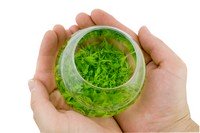 Many people claim theanine can only be found in the tea plant. This is only partially true.
This amino acid has also been discovered in one species of mushroom (Xerocomus badius) and certain species belonging to genus Camellia (C. japonica and C. sasanqua).
5. Found in Lipton?
Do you know that theanine content decreases with leaf age?
Young tea buds contain high levels of l-theanine, which gets converted to catechins as the leaves mature.
Therefore, tea buds harvested early in spring will contain much higher levels than mature leaves harvested later in the year.
If you are a tea drinker, you may be disappointed to learn that typical green tea sold in the Western hemisphere contains less than 10 milligrams per cup.
This is bad news. Scientists have found that you need as much as 50 to 200 milligrams of theanine to benefit, which is the same as 5 to 20 cups of green tea a day!
If you want natural occurring l-theanine, switch over to a high grade green tea, which may contain as much as 50 milligrams per cup.
High grade green tea is normally made from young tea buds harvested early spring. They need not be expensive. As far as theanine goes, my personal favorites are the Dragon Well and Biluochun tea.
6. Which Is Better? Natural Or Synthetic?
They don't say it on the label, but the l-theanine you found in a bottle is manufactured using enzymes rather than being extracted from tea leaves.
The process was invented by the Japanese company Taiyo, manufacturer of the Suntheanine product.
It was approved in Japan for unlimited use in food in 1964. Fancy some l-theanine in chocolate, soft drinks and even cosmetics? That is how widely this supplement is being used in Japan.
What are the advantages and disadvantage of synthetic over naturally occurring theanine?
7. What Health Benefits?
 There is a saying that you can't buy happiness with money. But consuming l-theanine does make easier your search for a more relaxed lifestyle.
It is estimated that 2 out of 3 adults experience some form of stress.
Studies have shown that theanine helps promote alpha brain waves, and increases your brain's production of dopamine to give you an alert, yet relaxed, awareness.
As you will see later, while other drugs also promote sedation, theanine is unique in two aspects:
There are no side effects from long term usage.
It does not cause drowsiness.
Theanine Health Benefits - 7 Reasons Why It's More Than A Relaxant
Caffeine - Improve Concentration
8. Dangerous Side Effects?
Many people say this amino acid is totally safe because green tea is the most widely consumed beverage after water.
But what about when it is made synthetically?
Luckily, this supplement has been approved for unlimited food use in Japan since 1964, and we have had 40 years of real life trials to understand its long term impact.
Side Effects - Can Too Much Be Harmful?
9. What Dosage?
Most credible sources recommend taking 50 to 200 milligrams a day with or without food, with up to 2 to 3 times daily as needed.
According to Cooper, it reaches maximum levels in the blood between 30 minutes to 2 hours after ingestion.
The total duration of effect is estimated to be from 8 to 12 hours.
10. Best Product?
Unlike green tea extract, L-theanine is produced synthetically in the laboratory. Some of the most popular brands are Suntheanine, Jarrow's 100 and Naka. This article reviews each product in detail.
New! Comments: Like This Story? Leave A Comment!
Also In This Section...
Theanine Content - The Complete Guide
References
Desai MJ, Armstrong DW (2004). Rapid Commun Mass Spectrom. Analysis of derivatized and underivatized theanine enantiomers by high-performance liquid chromatography/atmospheric pressure ionization-mass spectrometry. 2004;18(3):251-6.
Kato M, Gyoten Y, Sakai-Kato K, Toyo'oka T (2003). Rapid analysis of amino acids in Japanese green tea by microchip electrophoresis using plastic microchip and fluorescence detection. J Chromatogr A. 2003 Sep 26;1013(1-2):183-9.
Kakuda T, Nozawa A, Unno T, Okamura N, Okai O (2000). Inhibition effects of theanine on caffeine stimulation evaluated by EEG in the rat. Biosci Biotechnol Biochem. 2000 Feb; 64(2): 287-93.
Le Gall G, Colquhoun IJ, Defernez M (2004). Metabolite profiling using (1)H NMR spectroscopy for quality assessment of green tea, Camellia sinensis (L.). J Agric Food Chem. 2004 Feb 25;52(4):692-700.
Lugaz O, Pillias AM, Faurion A (2002). A new specific ageusia: some humans cannot taste L-glutamate. Chem Senses. 2002 Feb;27(2):105-15.
Cooper R (2005). Medicinal Benefits of Green Tea. The Journal of Alternative and Complementary Medicine. 11:521-528.
Back to Top of Theanine
Back to Amazing Green Tea Home
Copyright� 2006-2023 Amazing-Green-Tea.com. All rights reserved.