Solving problems every tea drinker faces.
Exclusive subscriber benefits:
Receive four FREE quality ebooks worth $60
-
Save at least $5 during your first purchase
Japanese tea bowls, called chawan, are used to drink matcha, the powdered green tea used in the Japanese tea ceremony.
The first chawan was probably imported from China along with green tea.
Over time, however, chawan developed a distinct style that expresses the ideals of the Japanese tea ceremony and makes them perfect for matcha.
Japanese Tea Ceremony - Traditional Ritual Explained
Two Styles
 At first, the tea ceremony was performed with smooth ceramic tenmoku tea bowls.
However, during the 16th century, tea master Sen Rikyu began searching for a new style of tea bowl that better expressed his philosophy of wabi, which involves appreciating the beauty of simplicity.
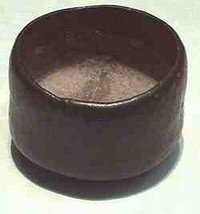
Raku Chawan
He found what he sought in the rough-textured, unglazed pottery made by a Korean potter named Raku Cho-jiro.
This type of tea bowl is known as Raku in his honor. Raku Cho-jiro's descendents still make these tea bowls, although they are extremely expensive.
Sen Rikyu's Last Act
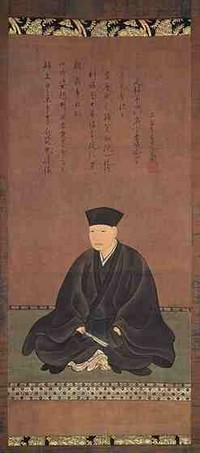 Japan's most famous tea master, Sen Rikyu, was a true romantic. His philosophy of wabi can be described as"artistic inclination" or even"forlorn".
Kakuzo Okakura, author of the acclaimed Book of Tea, described his ideals as follows:
"Teaism is a cult founded on the adoration of the beautiful among the sordid facts of everyday existence."
"It inculcates purity and harmony, the mystery of mutual charity, the romanticism of the social order."
"It is essentially a worship of the Imperfect, as it is a tender attempt to accomplish something possible in this impossible thing we know as life.'
Get the feeling?
In 1591, at the age of 70, he was ordered to commit suicide by the Japanese ruler.
His last act was to hold an exquisite tea ceremony.
After serving all his guests, he presented each of his guests with a piece of tea ware as a souvenir, with the exception of the bowl, which he shattered, uttering:
"Never again shall this cup, polluted by the lips of misfortune, be used by man."
As the guests departed, one remained to serve as witness to Rikyu's death.
Here are his last words to his dagger:
"Welcome to thee, O sword of eternity! Through Buddha And through Daruma alike Thou hast cleft thy way."
Oribe Chawan
After Sen Rikyu passed away, his student Furuta Oribe began encouraging potters to create more modern tea bowls, featuring contrasting glazes and painted designs.
This style is known as Oribe, and both styles of chawan are still available today.
Choosing Japanese Tea Bowls
When buying a chawan, there are a few things you should keep in mind.
First, examine the inside of the bowl. It should have a smooth texture, and the lip should be smooth and even, as in this handcrafted Japanese Matcha Bowl
If the finish on the inside of the bowl is too rough, the matcha powder will stick in the cracks and crevices rather than mixing evenly with the water.
Next, look at the bottom of the bowl - does it have an even, steady foot?
If the chawan does not sit evenly on the table, it will be difficult to whisk matcha without spilling it.
If you are at a store rather than shopping online, you should also pick up the chawan to make sure it is the right weight and feels good in your hand.
Another, slightly more affordable option is this Tea Ceremony Set
Japanese Tea Bowls in the Tea Ceremony
In the tea ceremony, you only want to use the"best of the best".
That means that the tea bowl is usually a one-of-a-kind item made by a well-known ceramic artist.
Often, Japanese tea bowls used in the tea ceremony are heirlooms. Sometimes, chawan are even given names of their own by the artist that created them.
There are also different types of Japanese tea bowls that are used according to the season, the rank of the people attending the ceremony, and the type of tea that is served.
For example, wide, shallow chawan called natsujawan are used to allow the tea to cool before drinking for summer tea ceremonies.
Narrower, taller chawan are used in the winter.

New! Comments: Like This Story? Leave A Comment!
References
Tea Mind. http://teamind.wordpress.com
Back to Top of Japanese Tea Bowls
Back to Matcha Green Tea Main Page
Back to Japanese Tea Main Page
Back to Amazing Green Tea Home
Copyright� 2006-2024 Amazing-Green-Tea.com. All rights reserved.